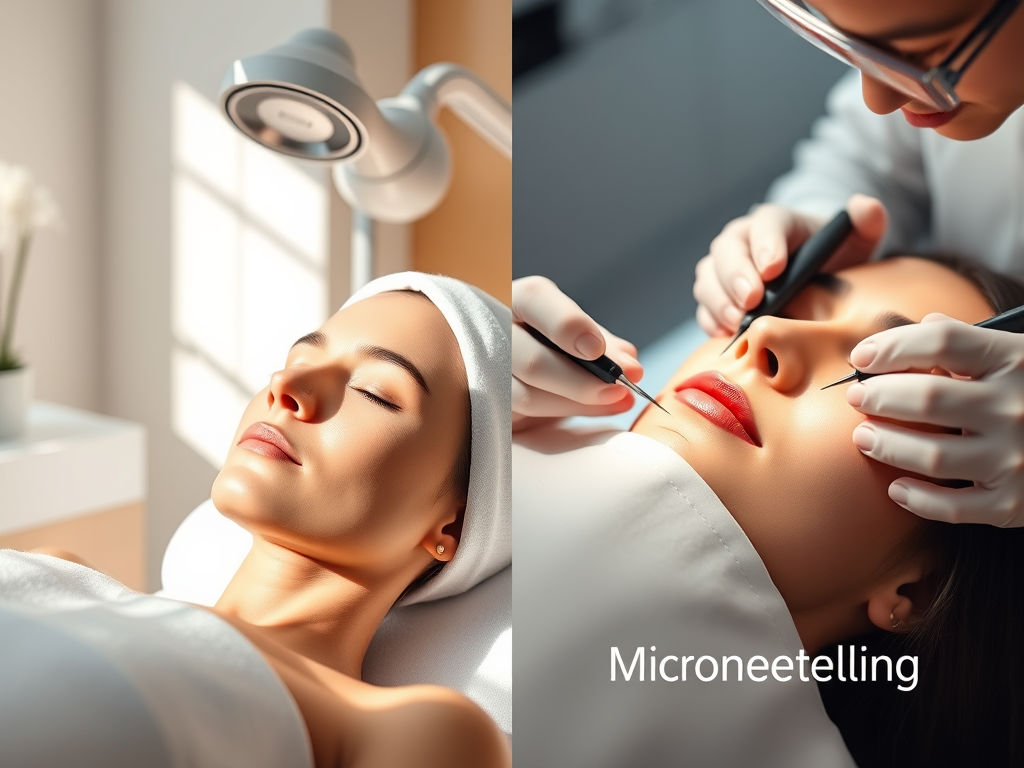

HydraFacial and microneedling (often enhanced with radiofrequency, or RF microneedling) are two of the most popular non-invasive to minimally invasive skin treatments at medical spas. While both aim to improve skin health, texture, and appearance, they work in fundamentally different ways and target distinct concerns. HydraFacial is a gentle, hydradermabrasion treatment focused on surface-level cleansing and hydration, while microneedling is a collagen-induction therapy that creates controlled micro-injuries for deeper rejuvenation.
Key Differences at a Glance
| Aspect | HydraFacial | Microneedling (Traditional or RF) |
|---|---|---|
| Mechanism | Vortex suction: Cleanse, exfoliate, extract, hydrate with serums | Fine needles create micro-channels to trigger collagen/elastin production |
| Invasiveness | Non-invasive, no needles | Minimally invasive |
| Downtime | None – immediate return to activities | 1-3 days redness, peeling, sensitivity |
| Session Length | 30-45 minutes | 30-60 minutes |
| Pain Level | Painless, relaxing (like a cool massage) | Mild discomfort (numbing cream used) |
| Cost per Session | $150-350 (average $200-250) | $300-800 (higher for RF) |
| Frequency | Monthly for maintenance | 3-6 sessions, 4-6 weeks apart; maintenance yearly |
What Each Treatment Excels At
HydraFacial is ideal for superficial concerns and quick refresh:
- Instant hydration and radiance
- Unclogging pores, reducing mild congestion/blackheads
- Improving dullness, even tone, and mild fine lines
- Suitable for all skin types, including sensitive or active acne
It’s often called a “lunchtime facial” – perfect before events. Dermatologists note it’s excellent for maintenance: “HydraFacial provides immediate results with no downtime, ideal for hydration and glow.”
Microneedling targets deeper, structural issues:
- Acne scars, pockmarks, and textured skin
- Fine lines, wrinkles, enlarged pores
- Skin laxity and overall firmness (especially RF versions)
- Hyperpigmentation and stretch marks
It delivers longer-lasting results by remodeling collagen. Experts agree: “Microneedling is the gold standard for elasticity, scarring, and significant texture improvement.”
Many providers recommend combining them: HydraFacial for regular upkeep and microneedling for intensive correction every few months.
Before-and-After Results
HydraFacial Results (Immediate glow, lasts 5-7 days; cumulative with monthly sessions):
Microneedling Results (Visible after 4-6 weeks; optimal after series):
Risks and Considerations
Both are safe when performed by qualified providers (e.g., under dermatologist supervision).
- HydraFacial: Minimal risks – temporary redness rare.
- Microneedling: Redness, swelling, minor peeling; rare infection or pigmentation changes (higher in darker skin tones). Avoid if active infections.
Which Should You Choose?
- Choose HydraFacial if you want quick, no-downtime glow, hydration, or mild concerns.
- Choose Microneedling for transformative, long-term results on scars, wrinkles, or texture.
- Combine both for optimal skin health, as many dermatologists suggest.
Consult a board-certified dermatologist for personalized advice – your skin type, concerns, and lifestyle will determine the best fit.